Competency Questions with examples – Application Forms







Competency Questions : How They Are Assessed (and How to Answer Them Well)
Competency questions are a core part of recruitment in the English job market, especially in the public sector, NHS, education, large corporations, and graduate roles. They are designed to assess how you have behaved in real situations, based on the belief that past behaviour predicts future performance.
Many employers now use a combination of ATS scoring and structured human marking to assess these answers. This means your response must be:
-
Easy to scan
-
Clearly linked to the competency
-
Supported by evidence and outcomes
How Competency Questions Are Scored
Competency answers are usually scored against a framework, for example:
-
0 = Not demonstrated
-
1 = Limited evidence
-
2 = Meets requirement
-
3 = Strong evidence
To score well, your answer must:
-
Address the competency directly
-
Use relevant keywords from the job description
-
Show what you personally did, not what “we” did
-
End with a result or learning outcome
Vague or overly narrative answers tend to score poorly, even if the experience itself was strong.
Example 1: Teamwork Competency – Competency Questions
Question:
“Give an example of when you worked effectively as part of a team.”
❌ Weak / Low-Scoring Answer
“I work well in teams and always get along with colleagues. In my previous role, I worked with different people and helped where needed. We completed our tasks successfully and everyone was happy.”
Why this scores poorly:
-
No specific situation or role
-
Overuse of “we” with no personal contribution
-
No skills, tools, or actions described
-
No measurable outcome
An ATS or assessor cannot clearly identify evidence of teamwork here.
✅ Strong / High-Scoring Answer
“In my previous administrative role, I worked as part of a team of five supporting a busy department. During a period of staff absence, I took responsibility for coordinating shared workloads by creating a daily task tracker in Excel and checking in with colleagues each morning. This improved communication within the team and ensured all deadlines were met on time, despite reduced capacity.”
Why this scores well:
-
Clear context and team size
-
Specific personal actions
-
Demonstrates teamwork and organisation
-
Includes a positive outcome
This answer is easy for both ATS and human assessors to score against the competency.
Example 2: Working Under Pressure Competency
Question:
“Describe a time when you had to work under pressure to meet a deadline.”
❌ Weak / Low-Scoring Answer
“I am used to working under pressure and can handle stressful situations well. My role often involved deadlines, and I always made sure my work was completed on time.”
Why this scores poorly:
-
Generic statements
-
No real example
-
No evidence of how pressure was managed
-
No result or reflection
This sounds confident but provides nothing measurable.
✅ Strong / High-Scoring Answer
“While working in a customer service role, I was required to process a high volume of enquiries during peak periods. On one occasion, system delays meant we were at risk of missing same-day response targets. I prioritised urgent cases, communicated realistic timeframes to customers, and used pre-approved templates to speed up responses. As a result, we met our service level targets and reduced follow-up complaints.”
Why this scores well:
-
Clear pressure scenario
-
Shows decision-making and prioritisation
-
Uses relevant workplace skills
-
Ends with a tangible result
This answer directly demonstrates the competency rather than simply claiming it.
Common Mistakes to Avoid in Competency Answers
-
Writing in general terms instead of giving a real example
-
Using “we” without explaining your individual contribution
-
Focusing on feelings rather than actions
-
Forgetting to include outcomes or learning
-
Ignoring the language used in the job description
Remember: competency questions are not personality tests. They are evidence-based assessments.
A Simple Formula That Works (Without Overcomplicating)
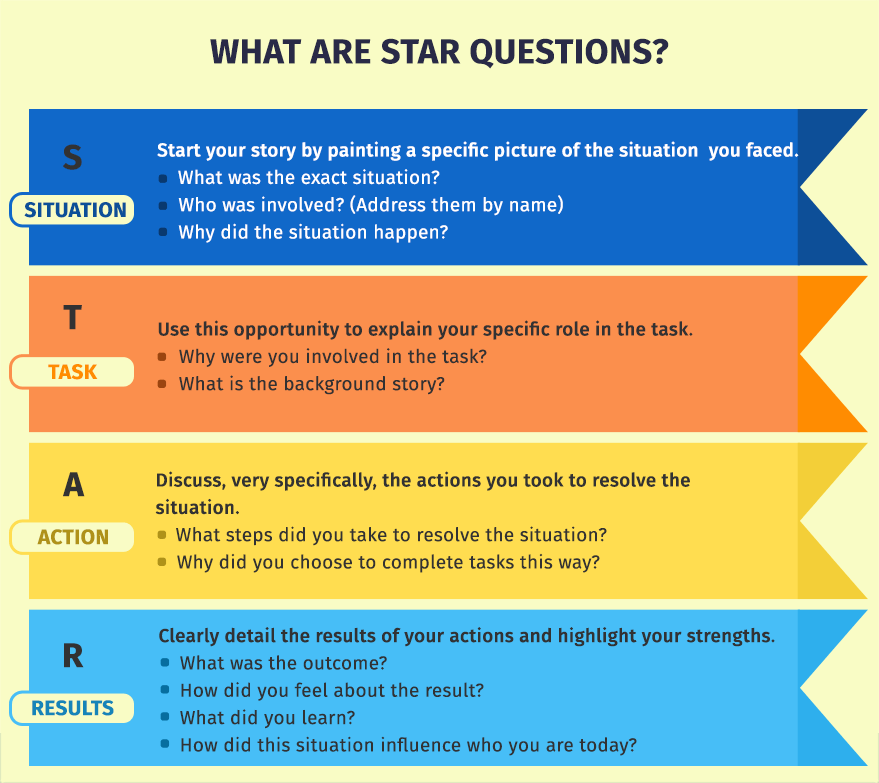
You do not need to rigidly label STAR sections, but your answer should clearly include:
-
Context – What was happening
-
Action – What you did and how
-
Result – What changed or what you achieved
If an assessor can easily highlight these three elements, your answer is likely to score well.