How to Get Past AI Sifting on Job Applications in the UK
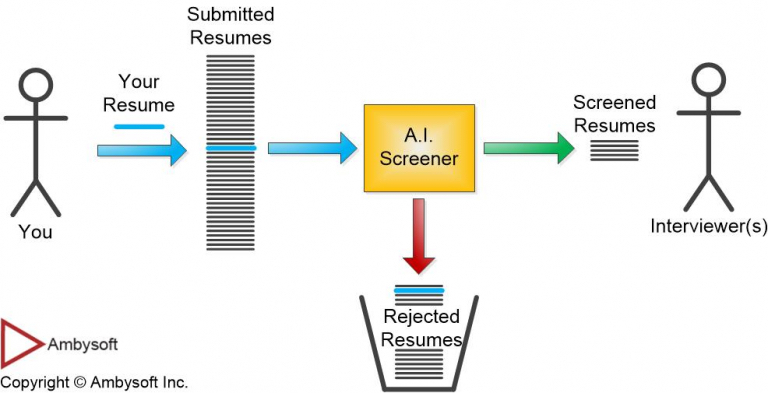
Most medium and large UK employers now use Applicant Tracking Systems (ATS) to manage high volumes of job applications as part of their AI sifting process. These systems filter CVs and application forms before a recruiter reviews them. Understanding how ATS works—and how to write for it—can significantly increase your chances of reaching the interview stage.
This article explains how ATS works, how to use personal examples effectively, when and how to tailor your CV, how to spot clues in application forms, and whether a cover letter is worth adding.
What Is an ATS and How Does It Work?
An Applicant Tracking System is software used by employers to:
Collect applications
Scan CVs and cover letters
Rank candidates based on job-related criteria
In the UK, popular ATS platforms include Workday, Taleo, iCIMS, Greenhouse, and Oracle. These systems do not make final decisions, but they decide who gets seen.
ATS typically looks for:
Keywords that match the job description
Evidence of required skills and experience
Job titles, qualifications, and tools
Clear structure and readable formatting
What ATS Struggles With
Creative layouts, tables, graphics, or icons
PDFs with embedded images or text boxes
Vague or generic wording
Unexplained career gaps
UK-specific note: Many UK employers score candidates against essential criteria listed in the person specification. If your application does not clearly demonstrate these, it may be automatically rejected.
Using Personal Examples in AI Sifting That Work for ATS and Recruiters
Personal examples are essential, but they must be explicit and evidence-based. ATS systems work best when skills are shown in context.
Weak Example
“Good communication skills and experience working in teams.”
Strong ATS-Friendly Example
“Collaborated with a team of 6 stakeholders to deliver weekly client reports, improving response times by 20%.”
Another Example (Admin / Office Role)
“Provided administrative support to a department of 25 staff, managing diaries, processing invoices, and maintaining accurate records using Microsoft Excel and SharePoint.”
Another Example (Retail / Customer Service)
“Handled an average of 40 customer queries per shift, resolving complaints in line with company policy and maintaining a 95% customer satisfaction score.”
These examples work because they:
Include skills + tools + outcomes
Use common ATS keywords
Show scale and responsibility
In the UK, competency-based recruitment is common, so examples should clearly show what you did, how you did it, and what happened as a result.
Should You Adapt Your CV for Each Application?
Yes. In the UK job market, tailoring your CV is strongly recommended, especially for roles in the public sector, education, healthcare, and large corporations.
What Tailoring Actually Means
You do not need a completely new CV each time. Instead:
Match your wording to the job description
Move the most relevant experience higher up
Remove or minimise irrelevant roles
Adjust your personal profile to reflect the role
Example
If a job advert emphasises stakeholder engagement, your CV should include:
“Regularly liaised with internal and external stakeholders to coordinate project updates and manage expectations.”
If the advert uses customer-focused, use that exact phrase—ATS often scores exact or close matches.
How to Spot Clues in UK Application Forms – AI sifting
UK application forms often provide very clear clues about what is being assessed.
These questions are often scored against a framework (sometimes with AI assistance). Your answer should:
Directly address the competency
Use the same language as the job description
Include a clear outcome
Example Answer Structure (STAR, simplified)
Situation: Brief context
Task: What you needed to do
Action: What you did (skills/tools)
Result: Outcome or learning
Avoid storytelling without evidence—clarity and relevance score higher than style.
Should You Add a Covering Letter (and How Long Should It Be)?
Yes, in the UK you should include a cover letter whenever there is an option to upload one, especially for:
Professional roles
Graduate schemes
Career-change applications
Ideal Length
300–500 words
3–4 short paragraphs
No more than one page
What a Good UK Cover Letter Includes
Why you are applying for this role
How your experience meets the key requirements
A brief explanation of anything unclear on your CV (career change, gap, part-time work)
Example Focus
Instead of:
“I am passionate and hardworking”
Use:
“My experience in customer-facing roles has strengthened my ability to manage competing priorities while maintaining high service standards, which aligns closely with the requirements outlined in the job description.”
Cover letters are often scanned by ATS but read by humans—write clearly, professionally, and directly.
Work Areas and Job Fields Actively Recruiting in the UK – AI sifting
While hiring trends change, the following areas continue to recruit strongly across England:
High-Demand Sectors
Healthcare and Social Care (NHS, care assistants, support workers)
Education (teachers, teaching assistants, SEN support)
Technology and Digital (IT support, software, data analysis, cyber security)
Construction and Skilled Trades (electricians, plumbers, site managers)
Logistics and Supply Chain (warehouse, transport planners, drivers)
Finance and Accounting (accounts assistants, payroll, auditors)
Customer Service and Call Centres
Hospitality and Facilities Management
Public Sector and Local Government
Professional Services (HR, project management, compliance)
Entry-Level and Career-Change Friendly Roles
Administration and office support
Customer service and retail
Trainee IT and digital roles
Care and support roles
Apprenticeships and graduate schemes
Many of these employers rely heavily on ATS due to application volume, making tailored, keyword-aligned applications especially important.
Final Thoughts on AI Sifting
Getting past ATS in the English job market is about clarity, relevance, and evidence. Use specific personal examples, tailor your CV to each role, read application forms carefully, and support your application with a focused cover letter. When you align your language with the employer’s requirements, you greatly improve your chances of progressing—both with AI systems and human recruiters.