







Welsh Rugby at a Crossroads: Regions, Rivalries, Reform and the Voice of the Fans
Welsh rugby is undergoing its most far-reaching transformation since the introduction of regional rugby in 2003. The current welsh rugby reorganisation represents an attempt by the Welsh Rugby Union (WRU) to confront deep-seated financial, structural, and cultural challenges that have undermined both professional performance and supporter confidence. At the heart of this process lies a fundamental dilemma: how to impose financial discipline and long-term sustainability without sacrificing the traditions and identities that define the Welsh game.
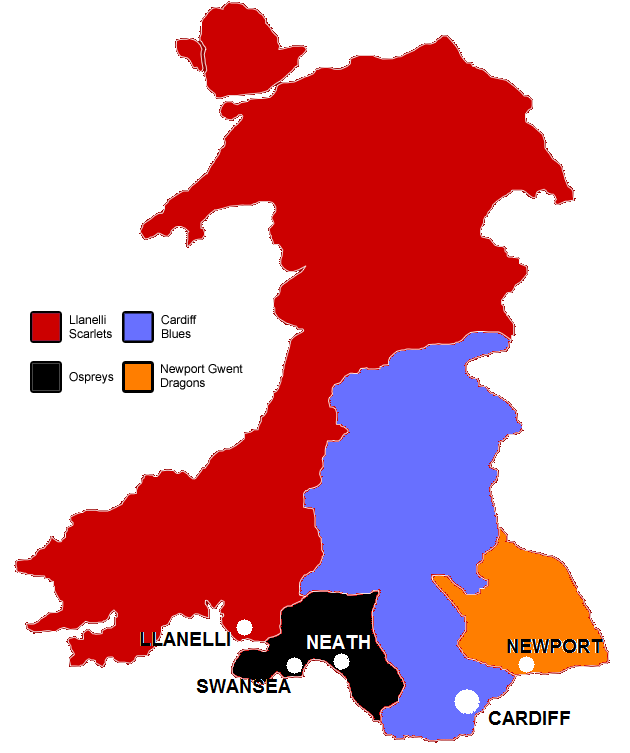
The WRU’s strategic review concluded that four equally funded professional regions are no longer viable within Wales’s limited economic and commercial environment. According to the governing body, spreading resources too thinly has weakened squad depth, coaching quality, and competitiveness in the United Rugby Championship and European competitions. From a governance standpoint, the welsh rugby reorganisation is framed as a rational response to financial reality and declining standards, designed to concentrate resources and improve elite performance. Yet this logic conflicts with the original purpose of regional rugby, which sought to preserve local identity while adapting to professionalism.
Welsh Rugby Reorganisation – Ospreys and Scarlets to merge?
The emotional weight of this decision is felt most strongly in rivalries between the Ospreys and the Scarlets, a fixture that encapsulates both the strengths and vulnerabilities of the regional system. The Ospreys have been the most successful Welsh region of the professional era, consistently producing silverware and international players, while the Scarlets embody a deep cultural heritage rooted in Llanelli’s historic rugby identity. Both clubs serve as vital community anchors, and the prospect that one might be merged or removed has heightened fears that the welsh rugby reorganisation prioritises efficiency over belonging, and economics over heritage.
In contrast, Cardiff’s position appears comparatively secure, reinforcing perceptions that it is the WRU’s favoured region. The capital benefits from the largest population base, close proximity to the Principality Stadium, and a dense network of feeder clubs and schools. The WRU’s decision to assume ownership of Cardiff Rugby was intended to stabilise the professional game, but for many supporters elsewhere it symbolises centralisation and imbalance. Within the context of the welsh rugby reorganisation, Cardiff represents both strategic necessity and a flashpoint for accusations of unequal treatment.
Below the professional tier, the domestic game has been reshaped by the introduction of Super Rygbi Cymru (SRC). SRC has replaced the old Welsh Premiership as the recognised second tier, designed to provide a clearer, more competitive bridge between community rugby and the professional regions. From the WRU’s perspective, this structure offers alignment, efficiency, and better talent development. However, it has also displaced the traditional Premiership from its historic role, reinforcing concerns that long-standing clubs are being marginalised by the welsh rugby reorganisation.
Welsh Rugby Reorganisation – Scope
These anxieties have been intensified by the proposed reduction in funding for Welsh Premiership rugby. For many Premiership clubs, WRU funding supports coaching, medical provision, player retention, and youth development. A reduction threatens to widen the gap between SRC-aligned clubs and those outside the new pathway, particularly in rural and economically challenged areas. Critics argue that weakening the Premiership risks eroding the foundations of the Welsh game by diminishing competitive depth and undermining historic clubs. The WRU counters that financial responsibility demands prioritisation, even when it conflicts with tradition.

It is within this environment that the scale and significance of the WRU’s fan review becomes central. Conducted over many months, the consultation represented one of the most extensive engagement exercises in Welsh rugby history. Tens of thousands of supporters participated through surveys, open forums, club meetings, and targeted discussions. The review explored governance, affordability, competitiveness, trust, and supporter experience, revealing widespread frustration but also a deep emotional investment in the future of the game.
The review showed that fans were not resistant to change in principle, but sceptical of leadership and fearful of losing identity. While supporter opinion did not determine specific outcomes, it reinforced the WRU’s belief that inaction would lead to further disengagement. At the same time, it highlighted the risk that the welsh rugby reorganisation could fail if it is perceived as imposed rather than inclusive.
The direction of reform has been shaped by key figures within governance and public discourse. WRU Chief Executive Abi Tierney, alongside a restructured board strengthened by independent directors, has driven a more corporate, accountable, and financially disciplined approach. This leadership style reflects a shift away from compromise toward decisive action. Meanwhile, influential rugby voices such as Sam Warburton, Jonathan Davies, Eddie Butler, and Gwyn Jones have consistently highlighted structural weaknesses in Welsh rugby, helping frame radical change as necessary rather than optional.
Ultimately, Welsh rugby stands at a defining moment. The welsh rugby reorganisation seeks to restore sustainability, competitiveness, and clarity, but it also challenges long-held traditions and emotional loyalties. Whether it succeeds will depend not only on financial outcomes or league positions, but on the WRU’s ability to balance economic realism with the cultural values that have sustained Welsh rugby for generations.
Welsh Rugby Reorganisation – Ospreys and Scarlets to Merge?
The emotional weight of this decision is felt most strongly in rivalries such as that between the Ospreys and the Scarlets. Their derby is one of the defining fixtures in Welsh rugby, shaped by geography, history, and identity. The Ospreys have been the most successful Welsh region of the professional era, consistently delivering titles and internationals, while the Scarlets embody a deep cultural legacy rooted in Llanelli’s historic role in Welsh rugby. Both regions serve as social and cultural anchors in their communities. The possibility that one could be merged or removed has sharpened debate about what regional rugby was meant to represent and whether its original promise has ever been fully realised.
By contrast, Cardiff’s position within the system appears increasingly secure, reinforcing perceptions that it is the WRU’s favoured region. The capital benefits from the largest population base, close proximity to the national stadium, and a dense network of feeder clubs and schools. The WRU’s decision to assume ownership of Cardiff Rugby was widely interpreted as a signal of its strategic importance. Supporters outside the capital often view this as evidence of imbalance, while the WRU argues it reflects pragmatic planning rather than preferential treatment.
Beneath the professional level, the domestic structure of the Welsh Rugby Reorganisation has been reshaped through the creation of Super Rygbi Cymru (SRC). This competition has replaced the old Welsh Premiership as the recognised second tier and is designed to provide a more intense, professionalised environment aligned with regional academies. In doing so, the traditional Premiership has not disappeared but has been repositioned. It remains socially and culturally vital, but it no longer sits at the centre of the elite player pathway. SRC now occupies that role, acting as the bridge between community rugby and the professional game.
A defining feature of this reorganisation—and one that distinguishes it from previous reforms—has been the scale and depth of the WRU’s fan review. The consultation process extended over many months and was among the most extensive ever undertaken in Welsh rugby. It included nationwide supporter surveys, open forums, club-level meetings, and targeted engagement with season-ticket holders, community volunteers, players, and grassroots officials. Tens of thousands of responses were gathered, covering professional, semi-professional, and community rugby.
Welsh Rugby Reorganisation – Scope
The scope of the review went far beyond opinions on regional numbers. Fans were asked to comment on governance, affordability, accessibility, competitiveness, player development, supporter experience, and trust in leadership. Many respondents expressed frustration at inconsistent messaging, declining standards, rising costs, and a perceived lack of accountability within Welsh rugby’s structures. Crucially, the review revealed not apathy, but deep emotional investment. Supporters were angry, disappointed, and anxious—but also willing to engage constructively if meaningful change followed.
While the WRU did not allow fan opinion to dictate specific outcomes—such as which region might be lost or merged—the consultation clearly influenced the direction and urgency of reform. It strengthened the argument that maintaining the status quo risked further disengagement and declining attendances. The WRU has since acknowledged that any new professional structure will fail unless it restores credibility and reconnects with supporters who feel alienated from the regional game.
The reforms have also been shaped by key figures within Welsh rugby governance and public discourse. Within the WRU, Chief Executive Abi Tierney and a reconstituted board—bolstered by independent directors following governance failures—have pushed for a more transparent, financially disciplined, and performance-driven model. Their approach reflects a shift away from consensus-based compromise toward decisive, and often unpopular, leadership.
Beyond the WRU, influential rugby commentators and former players have played a significant role in shaping public debate. Figures such as Sam Warburton, Jonathan Davies, Eddie Butler, and Gwyn Jones have repeatedly highlighted structural weaknesses in Welsh rugby, including talent drain, inadequate development pathways, coaching depth, and player welfare. Their consistent critique, delivered through broadcast media and print, helped legitimise the case for radical reform and framed the conversation in terms of necessity rather than choice.
Ultimately, the reduction of regions, the introduction of Super Rygbi Cymru, and the repositioning of the Premiership reflect a governing body attempting to correct long-standing structural flaws. Yet the success of this reorganisation will depend on more than financial sustainability or performance metrics. It will hinge on whether Welsh rugby can rebuild trust with its supporters, respect regional identities, and demonstrate that the sacrifices demanded are matched by a coherent, credible vision for the future.
Welsh rugby now stands at a pivotal moment. The structures are changing, the pathways are clearer, and the decisions are harder than ever. Whether this new era succeeds will depend not only on governance and funding, but on whether the voices of the fans—finally heard at scale—continue to shape the game they have long sustained.
A further point of contention has been the proposed reduction in funding for Welsh Premiership rugby, which has caused significant unease among clubs and supporters alike. For many Premiership sides, WRU funding represents a crucial lifeline rather than a discretionary supplement, supporting coaching posts, medical provision, player retention, and youth development. The prospect of reduced central funding raises concerns that the gap between community rugby and the professional pathway will widen, particularly for clubs outside the Super Rygbi Cymru structure. Critics argue that cutting Premiership funding risks weakening the very foundations of the Welsh game by forcing historic clubs to scale back ambitions, lose experienced semi-professional players, and reduce investment in academies and facilities. Supporters of the WRU’s approach counter that resources must be redirected toward SRC to create a clearer and more sustainable development pathway. However, the fear remains that diminishing Premiership support could accelerate player drop-off, reduce competitive depth, and erode the traditional club culture that has long underpinned Welsh rugby’s identity.
Summary — Big Picture
| Topic | Present Situation | Outlook |
|---|---|---|
| WRU Regional Restructure | Moving from 4 professional sides to 3 by 2028 for sustainability & competitiveness. Nation.Cymru | Ongoing consultation; mergers or rebranding likely around West Wales region. |
| Ospreys vs Scarlets Rivalry | Intense local derby; deep cultural ties. Ospreys | Still a key part of Welsh rugby identity, though threatened by structural change. |
| Cardiff’s Position | Seen as highly strategic by the WRU; population & pathway hub. Cardiff Rugby | Likely secure as a core region in future structure. |
| SRC vs Old Premiership | SRC is the new official second tier, superior to old Premiership setups. Ospreys | SRC will remain important for player development and club competitiveness. |
| Welsh Premiership Relevance | Traditional Premiership is effectively replaced; community clubs still matter. | SRC, not Premiership, is pathway-relevant now. |


